

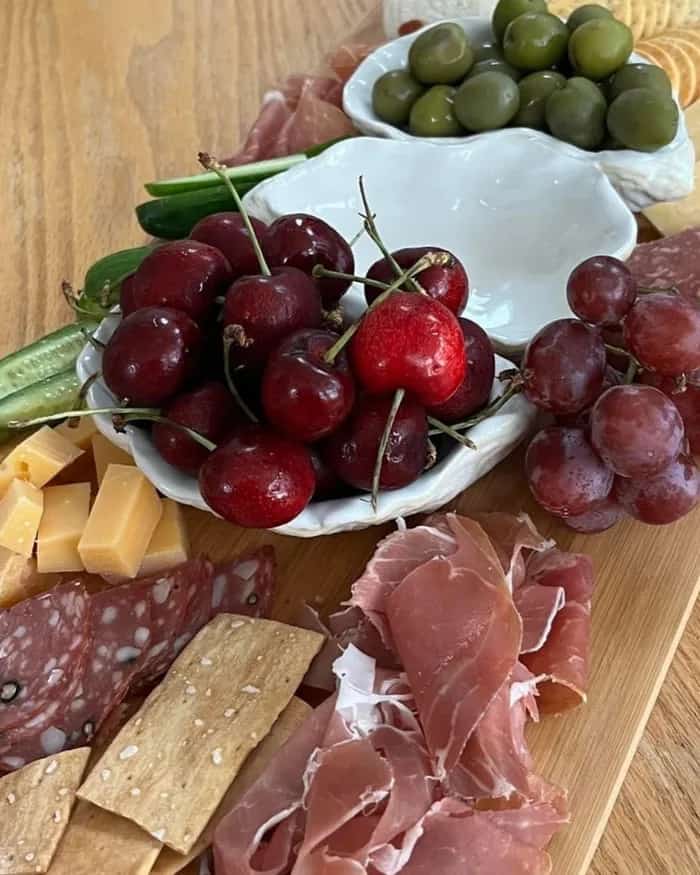

A cheese board is the easiest thing to serve and the easiest thing to overthink. Here is the formula we give people at the counter, and everything you need for it sits in one aisle.
A cheese board is the easiest thing in the world to serve and the easiest thing in the world to overthink. People stand at our cheese case on a Friday afternoon holding a party in their head, and the question is almost always the same: how much, and which ones?
Here is the formula we give them. It has never failed anybody.
Start With Three
Three cheeses is the number. Two feels like you ran out of ideas, five means nobody remembers what they ate. Three gives every guest a choice and gives you a board that reads as considered rather than crowded.
Pick one from each of these lanes:
- Something soft. A brie, a triple crème, a fresh goat. This is the crowd-pleaser and the first thing to disappear.
- Something firm. An aged cheddar, a manchego, a gruyère. Salty, sliceable, and the one people go back for.
- Something with an opinion. A blue, a washed rind, a sharp aged gouda. Not everyone will touch it. The people who do will talk about it.
The contrast is the whole point. Three soft cheeses is not a board, it is a mood.
How Much to Buy
Two ounces per person if the board is an appetizer. Four if it is dinner and you are being honest with yourself about that.
For a party of eight that means about a pound total, split across your three. Round up. Leftover cheese is not a problem anybody has ever complained about.
What Goes Around It
The cheese is the reason people came. Everything else is there to make the cheese taste like more than itself.
- Something crunchy. A neutral cracker and a sliced baguette. Skip anything heavily seasoned — it competes.
- Something sweet. Fig jam, honey, or a handful of grapes. Sweetness is what makes a salty aged cheese suddenly make sense.
- Something briny. Cornichons, olives, or marinated peppers to reset the palate between bites.
- Something cured. Prosciutto or a dry salami, folded rather than laid flat so it has some height.
The Order You Build It In
This part matters more than people expect, and it takes four minutes.
- Cheese first, spaced apart. Put the three down in a triangle with real gaps between them. Those gaps are where everything else goes.
- Pre-cut the hard cheese. A few slices already off the wedge tells people it is okay to start. An untouched wedge with a knife beside it makes everyone wait for someone braver.
- Bowls next. Jam, honey, and olives go in small bowls, dropped into the gaps. They anchor the board.
- Meat in folds. Drape it, don't stack it.
- Crackers and fruit last. These are the filler. Push them into whatever space is left until no board shows through.
The goal is abundance. A board with visible empty wood looks like a plan that didn't work out; a board that is slightly overfull looks like generosity.
Take It Out Early
Cold cheese tastes like almost nothing. Fat carries flavor and it stays locked up at refrigerator temperature.
Set the board out thirty to sixty minutes before people arrive. The soft cheeses will slump slightly, the aged ones will smell like themselves again, and the difference is not subtle. It is the single easiest upgrade on this entire list and it costs nothing.
One Last Thing
Label them, or at least remember them. Someone will ask what the blue was, and "the blue one" is a worse answer than the name of a cheese they can come back and buy.
Everything above — the three cheeses, the jam, the cornichons, the baguette — is one trip down one aisle at any Savi. Come find the cheese case and tell us how many people you are feeding. We will do the picking.
Last updated: September 4, 2026